Proudly Serving Locations near you
Local ISR Swim Lessons in Jacksonville, NC
Currently one primary location: A private residential indoor heated pool in the Northwoods neighborhood. Though we are willing to travel depending on distance, pool availability, and instructor availability.
Locations
Currently we have one primary location: A private residential indoor heated pool in the Northwoods neighborhood. We are willing to travel depending distance and instructor availability.
FAQs
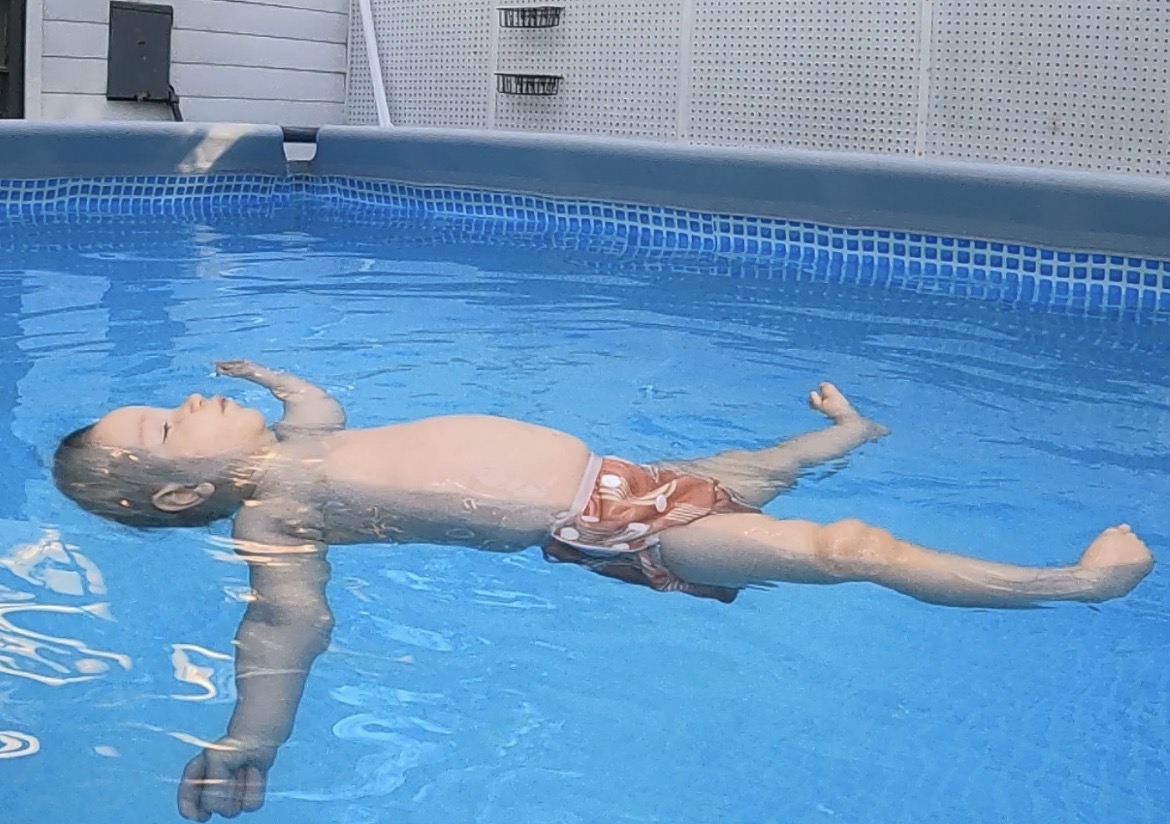
Is it the baby fat that makes them float?
Actually, the primary factor in a baby’s ability to float is the ability to take air into the lungs. To maintain
this access to air, the child must adjust his/her posture. The difference in positioning for an adult can be
inches. For a baby, this adjustment is reduced to centimeters. If a child’s body posture is just a few
centimeters off, it can make the difference between the face being submerged or the child having access
to air.
How do the kids react during the first few lessons?
Children often fuss during the first few lessons because they are in a new environment and around new
people. As your child becomes more confident in his/her ability in the water, the fussing will decrease.
It is not unlike the first time you tried a new exercise class or were asked to perform a task at work that
you’d never done before: the first time you try a new task it is always challenging, until you get the hang
of it. It is the same for your young child. Your child is learning to perform a skill that he/she’s never done
before.
If more frequent but shorter lessons are better, then why don’t you teach 7 days/week?
Everyone needs a little break from learning to process the information and in this case to give muscles a
chance to recover. In addition, you need to be able to spend time with your family, as does your
instructor. Weekends are family time. Periodically, if weather or other issues have cause lessons to be
canceled for numerous days, your instructor may choose to offer make-up lessons on a weekend. This is
strictly up to the instructor and based on the availability of parents.
Can you really teach a child who is not verbal how to swim?
Yes. Consider that children learn to sit, crawl and walk before they learn to speak. Because we teach
through sensori-motor learning, verbal skills are not required for a child to acquire Self-Rescue skills. We
are able to communicate with our students through touch and positive reinforcement while striving to
set our students up for success every step of the way.
Contact us for more info!
We would love to hear from you.